Steroids or corticosteroids and glucocorticoids — are medications prescribed for different types of inflammation. They can treat rashes, allergic reactions, asthma, autoimmune disorders, and more. Steroids come in different forms: pills, creams, injections, inhalants, and IV (intravenous) infusions.Steroids work quickly to shut down inflammation. But they come with many potential side effects. The risk of side effects increases with higher doses and longer time of use. So the lowest dose for the shortest amount of time possible is ideal. But steroids can’t always be stopped suddenly because that can also cause unwanted effects. The dose needs to be slowly lowered over time (tapered) to stop them safely.
Advantages of Steroid Finished
Anti inflammatory: By inhibiting the production and release of inflammatory mediators, reducing the infiltration of inflammatory cells and the development of inflammatory reactions, the symptoms and tissue damage caused by inflammation can be alleviated.
Improving metabolic function: Steroids can effectively regulate sugar metabolism and water salt metabolism, and many artificially synthesized steroid hormones have more significant effects after use.
Immunosuppression: Steroids can suppress the function of the immune system, reduce the activity of immune cells, and decrease the production of antibodies. This immunosuppressive effect plays an important role in the treatment of immune related diseases such as autoimmune diseases and transplant rejection reactions.
Antiallergy: Steroids can inhibit allergic reactions, reduce the release of allergens, and decrease the activity of allergic cells. In the treatment of allergic diseases such as asthma and allergic rhinitis, steroids can alleviate allergic symptoms and control inflammatory reactions.
Antitumor: Some steroids have anti-tumor effects, which can inhibit the proliferation and metastasis of tumor cells, and are commonly used to treat certain types of malignant tumors such as leukemia and lymphoma.
-
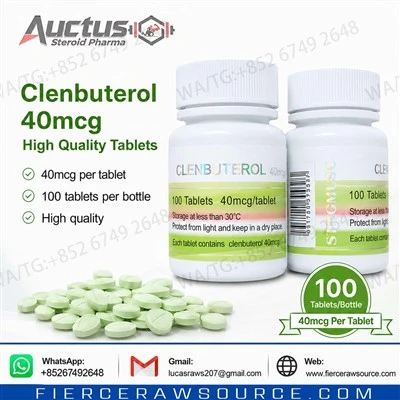
![40mcg Clenbuterol Bulk Tablet Manufacturing Supplier]() 40mcg Clenbuterol Bulk Tablet Manufacturing SupplierIn the interdisciplinary field of athletic performance research and clinical respiratory disease treatment, 40mcg clenbuterol tablets have become a highly regarded molecular tool due to their potent bronchodilator effect and uniqueread more
40mcg Clenbuterol Bulk Tablet Manufacturing SupplierIn the interdisciplinary field of athletic performance research and clinical respiratory disease treatment, 40mcg clenbuterol tablets have become a highly regarded molecular tool due to their potent bronchodilator effect and uniqueread more -
![STROMUSC Brand 250mg/ml Testosterone Cypionate 10ml Finished Oil]() STROMUSC Brand 250mg/ml Testosterone Cypionate 10ml Finis...Testosterone Cypionate is one of the most frequently used long-acting testosterone ester preparations in the world. It is well-known for its excellent pharmacokinetic characteristics, long duration of action and stable blood drugread more
STROMUSC Brand 250mg/ml Testosterone Cypionate 10ml Finis...Testosterone Cypionate is one of the most frequently used long-acting testosterone ester preparations in the world. It is well-known for its excellent pharmacokinetic characteristics, long duration of action and stable blood drugread more -
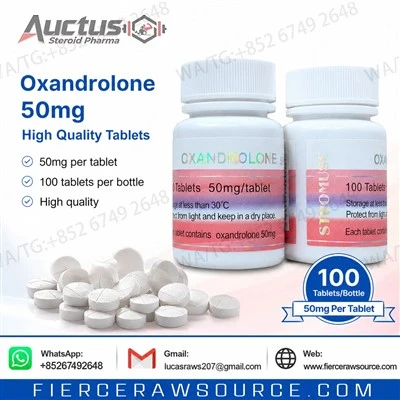
![50mg Anavar (Oxandrolone) Tablets Premium Quality Manufacturer]() 50mg Anavar (Oxandrolone) Tablets Premium Quality Manufac...In today's pharmaceutical and research market, product consistency has become just as important as the active ingredient itself. When selecting 50mg Anavar (Oxandrolone) tablets, experienced buyers are no longer focused solely onread more
50mg Anavar (Oxandrolone) Tablets Premium Quality Manufac...In today's pharmaceutical and research market, product consistency has become just as important as the active ingredient itself. When selecting 50mg Anavar (Oxandrolone) tablets, experienced buyers are no longer focused solely onread more -
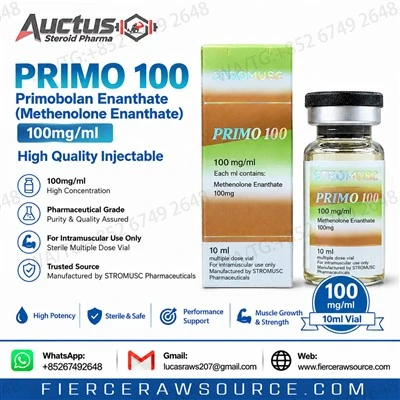
![Primobolan Enanthate 100 (Methenolone Enanthate): Product Overview, Properties Applications]() Primobolan Enanthate 100 (Methenolone Enanthate): Product...Primobolan Enanthate 100, also known as Methenolone Enanthate, is an oil-based injectable formulation containing methenolone enanthate, a long-acting ester of the anabolic-androgenic steroid methenolone. It is a well-known compound withinread more
Primobolan Enanthate 100 (Methenolone Enanthate): Product...Primobolan Enanthate 100, also known as Methenolone Enanthate, is an oil-based injectable formulation containing methenolone enanthate, a long-acting ester of the anabolic-androgenic steroid methenolone. It is a well-known compound withinread more -
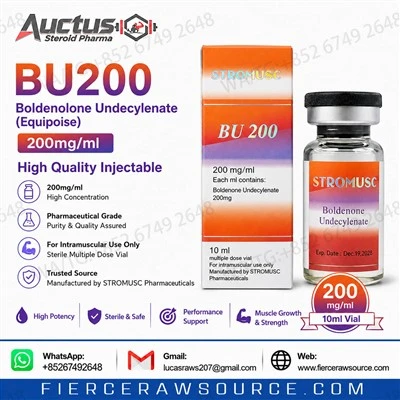
![BU200 Boldenolone Undecylenate Injectable Oil - High-quality Oil.]() BU200 Boldenolone Undecylenate Injectable Oil - High-qual...BU200 typically refers to an oil-based product with Boldenolone Undecylenate as the main ingredient and a labeled concentration of 200 mg/mL. Boldenolone Undecylenate, also commonly known as Equipoise, is a long ester anabolic androgenread more
BU200 Boldenolone Undecylenate Injectable Oil - High-qual...BU200 typically refers to an oil-based product with Boldenolone Undecylenate as the main ingredient and a labeled concentration of 200 mg/mL. Boldenolone Undecylenate, also commonly known as Equipoise, is a long ester anabolic androgenread more -
![Sustanon 250 (TP, TPP, TIS, TDECA) 10ml Oil – Four-Ester Testosterone Blend For Consistent Pharmaceutical Quality]() Sustanon 250 (TP, TPP, TIS, TDECA) 10ml Oil – Four-Ester ...Sustanon 250 is a classic four-ester testosterone blend designed around a simple but distinctive concept: combining testosterone esters with different release characteristics in a single oil-based formulation. The four active componentsread more
Sustanon 250 (TP, TPP, TIS, TDECA) 10ml Oil – Four-Ester ...Sustanon 250 is a classic four-ester testosterone blend designed around a simple but distinctive concept: combining testosterone esters with different release characteristics in a single oil-based formulation. The four active componentsread more -
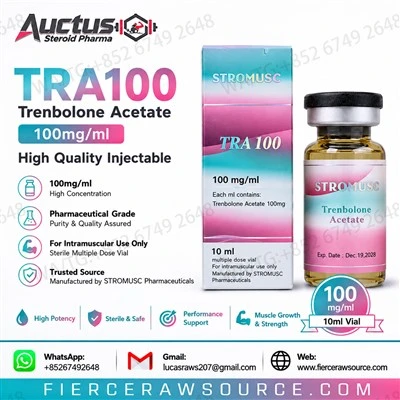
![Premium Trenbolone Acetate (TRA100) 100mg/ml – 10ml Injectable Oil]() Premium Trenbolone Acetate (TRA100) 100mg/ml – 10ml Injec...Trenbolone Acetate (TRA100) 100mg/ml is a premium injectable oil formulated with high-purity Trenbolone Acetate raw material and manufactured under strict pharmaceutical-quality production standards. Designed with consistency, stability,read more
Premium Trenbolone Acetate (TRA100) 100mg/ml – 10ml Injec...Trenbolone Acetate (TRA100) 100mg/ml is a premium injectable oil formulated with high-purity Trenbolone Acetate raw material and manufactured under strict pharmaceutical-quality production standards. Designed with consistency, stability,read more -
![High-Quality Testosterone Enanthate (TE250) 10ml Oil]() High-Quality Testosterone Enanthate (TE250) 10ml OilIn the sophisticated landscape of male endocrine therapy and androgen replacement therapy (TRT), the 10ml specification of testosterone enanthate injection (Testosterone Enanthate 250mg/ml, abbreviated as TE250) firmly occupies theread more
High-Quality Testosterone Enanthate (TE250) 10ml OilIn the sophisticated landscape of male endocrine therapy and androgen replacement therapy (TRT), the 10ml specification of testosterone enanthate injection (Testosterone Enanthate 250mg/ml, abbreviated as TE250) firmly occupies theread more -
![High-Quality 10mg Winstrol (Stanozolol) Oral Steroid Supplier]() High-Quality 10mg Winstrol (Stanozolol) Oral Steroid Supp...In the sophisticated landscape of modern athletic performance and competitive bodybuilding research, 10mg Stanozolol (brand name Winstrol) tablets hold a prominent position at the pinnacle of oral steroids due to their exceptional dryread more
High-Quality 10mg Winstrol (Stanozolol) Oral Steroid Supp...In the sophisticated landscape of modern athletic performance and competitive bodybuilding research, 10mg Stanozolol (brand name Winstrol) tablets hold a prominent position at the pinnacle of oral steroids due to their exceptional dryread more -
![High-Quality 40mcg T3 (Liothyronine Sodium) Pharmaceutical Tablet]() High-Quality 40mcg T3 (Liothyronine Sodium) Pharmaceutica...In the intricate landscape of endocrine and metabolic regulation in the human body, 40mcg Liothyronine Sodium (T3) tablets, with their superior bioactivity and rapid metabolic regulation, firmly occupy the pinnacle of thyroid hormoneread more
High-Quality 40mcg T3 (Liothyronine Sodium) Pharmaceutica...In the intricate landscape of endocrine and metabolic regulation in the human body, 40mcg Liothyronine Sodium (T3) tablets, with their superior bioactivity and rapid metabolic regulation, firmly occupy the pinnacle of thyroid hormoneread more -
![High Purity Clomid 50mg Tablet Manufacturer]() High Purity Clomid 50mg Tablet ManufacturerIn the broad field of reproductive endocrinology and assisted reproductive research, 50mg clomiphene (generic name clomiphene citrate) tablets, with their classic ovulation-inducing mechanism and excellent endocrine regulatory capacity,read more
High Purity Clomid 50mg Tablet ManufacturerIn the broad field of reproductive endocrinology and assisted reproductive research, 50mg clomiphene (generic name clomiphene citrate) tablets, with their classic ovulation-inducing mechanism and excellent endocrine regulatory capacity,read more -
![High-Quality 70mg Cock Bombs Tablets - Factory Wholesale]() High-Quality 70mg Cock Bombs Tablets - Factory WholesaleIn the complex landscape of anabolic steroids, 70mg Cock Bombs tablets, with their extreme explosive power and superior dry muscle-building efficiency, firmly occupy the pinnacle of high-end athletic performance research. As a compoundread more
High-Quality 70mg Cock Bombs Tablets - Factory WholesaleIn the complex landscape of anabolic steroids, 70mg Cock Bombs tablets, with their extreme explosive power and superior dry muscle-building efficiency, firmly occupy the pinnacle of high-end athletic performance research. As a compoundread more


Why Choose Us
Our Factory
The factory of Auctus Steroid Pharma Co., Ltd is located in the scenic high-tech industrial park of Wuhan City, Hubei Province, covering an area of 240,00 square meters. It has modern production plants, R&D centers and warehousing and logistics centers.
ISO Certification
Obtain relevant certifications from ISO (International Organization for Standardization), such as ISO 9001 quality management system certification, ISO 14001 environmental management system certification, etc., to prove the company's capabilities in quality management, environmental protection, etc.
Regional Market
Auctus Steroid Pharma Co., Ltd is sold worldwide, especially in North America and Europe. These regions have an urgent need for efficient and safe weight loss drugs, providing a good market environment for the company.
After-Sales Service
Establish a customer care system, regularly greet customers through phone calls, emails, text messages, etc., and pay attention to customers' physical condition and fitness progress.For long-term customers or important customers, provide exclusive customer service manager services to provide more intimate and personalized services.
Precautions When Using Steroid Finished
A short course of oral steroids usually causes no side-effects. Side-effects are more likely to occur with a long course of oral steroids (more than 2-3 months), or if short courses are taken repeatedly.
The main possible side-effects include the following
'Thinning' of the bones (osteoporosis)
If steroids are going to be taken long-term then it is often advised to take medications or supplements to strengthen the bones and help prevent osteoporosis.
Weight gain
Weight gain is common on high dose or long-term oral steroids. As well as gaining weight, some people develop puffiness around the face and at the base of the neck.
Increased chance of infections
On long-term or high-dose oral steroids, there is a higher chance of developing an infection, or an infection being more serious, because steroids may suppress the immune system.
In particular, people who have not had chickenpox or measles in the past (and so are not immune) may be advised to avoid people with chickenpox, shingles or measles.
Infections which may remain in the body, such as tuberculosis (TB), or herpes, may recur.
Increase in blood pressure
There may be an increase in blood pressure, so it is important for blood pressure to be checked regularly, at least once a year. It can be treated if it becomes high.
High blood sugar (hyperglycaemia)
Steroids can cause raised blood sugar, leading some people to develop diabetes. People who already have diabetes may need more medication to control their blood sugar. People on long-term oral steroids are usually advised to have a yearly blood test to check for diabetes
Skin problems
Long-term oral steroids often cause skin problems such as slower healing after injuries, thinning skin, and easy bruising. Stretchmarks sometimes develop.
Muscle weakness
Muscle weakness can be noticeable on long-term oral steroids but this improves after the steroid is stopped.
Indications and Usage for Steroid
Endocrine disorders: Primary or secondary adrenocortical insufficiency (hydrocortisone or cortisone is the first choice; synthetic analogs may be used in conjunction with mineralocorticoids where applicable; in infancy mineralocorticoid supplementation is of particular importance), congenital adrenal hyperplasia, nonsuppurative thyroiditis, hypercalcemia associated with cancer.
Rheumatic disorders: As adjunctive therapy for short-term administration (to tide the patient over an acute episode or exacerbation) in: psoriatic arthritis; rheumatoid arthritis, including juvenile rheumatoid arthritis (selected cases may require low-dose maintenance therapy); ankylosing spondylitis; acute and subacute bursitis; acute nonspecific tenosynovitis; acute gouty arthritis; posttraumatic osteoarthritis; synovitis of osteoarthritis; epicondylitis.
Collagen diseases: During an exacerbation or as maintenance therapy in selected cases of: systemic lupus erythematosus, acute rheumatic carditis.
Dermatologic diseases: Pemphigus, bullous dermatitis herpetiformis, severe erythema multiforme (Stevens-Johnson syndrome), exfoliative dermatitis, mycosis fungoides, severe psoriasis, severe seborrheic dermatitis.
Allergic states: Control of severe or incapacitating allergic conditions intractable to adequate trials of conventional treatment: seasonal or perennial allergic rhinitis, serum sickness, bronchial asthma, contact dermatitis, atopic dermatitis, drug hypersensitivity reactions.
Ophthalmic diseases: Severe acute and chronic allergic and inflammatory processes involving the eye and its adnexa, such as: allergic conjunctivitis, keratitis, allergic corneal marginal ulcers, herpes zoster ophthalmicus, iritis and iridocyclitis, chorioretinitis, anterior segment inflammation, diffuse posterior uveitis and choroiditis, optic neuritis, sympathetic ophthalmia.
Respiratory diseases: Symptomatic sarcoidosis, Loeffler's syndrome not manageable by other means, berylliosis, fulminating or disseminated pulmonary tuberculosis when used concurrently with appropriate antituberculous chemotherapy, aspiration pneumonitis.
Hematologic disorders: Idiopathic thrombocytopenic purpura in adults, secondary thrombocytopenia in adults, acquired (autoimmune) hemolytic anemia, erythroblastopenia (RBC anemia), congenital (erythroid) hypoplastic anemia.

The basic structure of steroids, gonane (cyclopentanoperhydrophenanthrene), has 17 carbons which are arranged as three six-member carbon rings to which a five-member carbon ring is attached . Each carbon has one or two hydrogens attached. The gonane structure can be represented without showing the carbons and hydrogens.
Steroids can be divided into different groups of parent compounds, based on the number of carbons that they contain. In addition to gonanes, which consist of 17 carbons, estranes consist of 18 carbons (C18 steroids) and include estrogens.
Androstanes have 19 carbons (C19 steroids) and include androgens. Pregnanes contain 21 carbons (C21 steroids) and include progesterone and corticosteroids.
This chapter focuses primarily on C18, C19, and C21 steroids. Cholanes have 24 carbons and include bile acids, and cholestanes have 27 carbons and include cholesterol as well as cholesterol-like compounds. The compounds in this group are also referred to as sterols.
In each group of parent steroids, compounds differ in their characteristics because of the presence of different functional groups on the molecules. Other functional groups include the carboxyl and aldehyde groups, which are present in the molecules of bile acids and aldosterone, respectively . An important characteristic of the C18 steroids is the presence of an aromatic ring that is found in estrogens (e.g., estradiol) .
Steroid Finished Methods of Isolation
Procedures for isolation of steroids differ according to the chemical nature of the steroids and the scale and purpose of the isolation. Steroids are isolated from natural sources by extraction with organic solvents, in which they usually dissolve more readily than in the aqueous fluids of tissues. The source material often is treated initially with an alcoholic solvent, which dehydrates it, denatures (renders insoluble) proteins associated with the steroids, and dissolves many steroids. Saponification either of whole tissues or of substances extracted from them by alcohol splits the molecules of sterol esters, triglycerides, and other fatty esters and permits the extraction of the sterols by means of water-immiscible solvents, such as hexane or ether, with considerable purification. Intact sterol esters or hormonal steroids and their metabolites (compounds produced by biological transformation) that are sensitive to strong acids or alkalies, however, require essentially neutral conditions for isolation, and, although some procedures for analysis of urinary steroids employ acid treatment, milder hydrolysis, as by enzymes, is preferred. The acidity of some steroids allows them to be held in alkaline solution, while nonacidic impurities are extracted with organic solvents.
Abundant steroids usually are purified by repeated crystallization from solvents. Small-scale laboratory isolations for investigative or assay purposes usually exploit differing polarities of the steroid and of its impurities, which may be separated by partitioning between solvents differing in polarity or by chromatography (see below Determination of structure and methods of analysis). Occasionally, special reagents may selectively precipitate or otherwise sequester the desired steroid. A classical example is the precipitation of 3β-hydroxy sterols such as cholesterol by the natural steroid derivative digitonin. New steroids of great physiological interest often are isolated from tissue only with extreme difficulty, because they are usually trace constituents. In one example, 500 kg (1,100 pounds) of silkworm pupae yielded 25 mg (0.0008 ounce) of pure molting hormone, the steroid ecdysone (i.e., 20 × 106-fold purification). In such cases each isolation step is followed by an assay for the relevant physiological activity to ensure that the desired material is being purified. The percentage recovery of known steroid hormones during their assay in small biological samples usually is assessed by adding a trace of the same steroid in radioactive form to the initial sample, followed by radioassay (analysis based on radioactivity) after purification is complete. The efficiency of recovery of the radioactive steroid is assumed to be the same as that of the natural substance.
Steroidogenesis
Steroidogenesis or steroid biosynthesis is a complex process; for the successful and continued production of steroid hormones, cell metabolism requires a sensitive balance among the various requisites. Basically, the following requirements should be met for steroid biosynthesis:
1. Adequate stores of precursors; namely, cholesterol, with efficient enzymes for utilizing the precursor pool.
2. Metabolic tools for generating substrates and cofactors required for steroid synthesis.
3. Stimulatory influences such as hormones must remain at a steady level.
4. Biotransformation and inhibitory factors must always be minimal.
Interference with any one or more of these processes might be sufficient to terminate or reduce steroid production. The skeletal process by which steroids are synthesized is as follows: The precursor of all steroids is cholesterol, which is of dietary origin or is synthesized by the organism from acetyl coezyme A. Steroid producing cells seem to rely mainly on the circulating sterol pool for their cholesterol.
Most of the cholesterol ready for conversion into steroids within steroid forming cells exists as esters of unsaturated fatty acids, presumably because the free sterol might readily diffuse from the cells into the intercellular fluid.
Esterification of cholesterol is catalyzed by two enzymes: Acyl CoA synthetase and sterol acyl transferase. Acyl CoA synthetase converts free fatty acids to CoA esters in the presence of CoA and ATP, while sterol acyl transferase directs the esterification of the fatty acid moiety to cholesterol. Once esterified, cholesterol is stored in cytoplasmic droplets along with smaller amounts of other lipids. But before this precursor pool can be utilized, the cholesterol must be liberated and that is accomplished by a sterol esterase. The esterol esterase hydrolyzes the cholesterol ester and cholesterol is thereby liberated for further utilization. The whole process of conversion and reversion of cholesterol to and from esters is rather obscure, and the factors regulating this process need further intensive study for proper resolution of the whole chain of events responsible for intracellular transfer of sterols and steroid esters from one organelle to another and for keeping free cholesterol ready for conversion into steroid hormones.
Steroids are usually injected into a muscle or taken by mouth as tablets, but they also come as creams or gels that are applied to the skin.
Many people who use anabolic steroids are aware of the dangers of taking them, and believe that by taking the drugs in certain ways they can avoid side effects. Or they may take additional medicines to try to counter the side effects.
Take the drugs for a period of time and then stop for a rest period before starting again. This is known as "cycling".
Take more than one type of anabolic steroid at a time, known as "stacking", which they believe makes the steroids work better.
Do a combination of both stacking and cycling, known as "pyramiding", where they start off taking a low dose of one or more anabolic steroids, and then increase the dose over time up to a maximum dose. They then stop taking them for a rest period to give the body a break before starting the cycle again.
But there is no evidence that any of these methods actually reduce side effects and harms from taking anabolic steroids.
Users tend to exercise more when they're taking high doses to make the most of their improved performance during this time.

Selecting the Correct Steroid
Before prescribing a steroid, prescribers should perform a potassium hydroxide test to ensure that the disease to be treated is not a fungal infection, which may be aggravated by the use of steroids. Each steroid comes in a variety of potencies and preparations (which is determined by both the steroid itself and its concentration), so it’s important to know which one to prescribe and the duration and frequency of application. Low-potency corticosteroids can be prescribed for children and mild diseases. Due to the risk of skin thinning associated with topical steroids, only low-potency steroids should be used on areas such as the face and groin. Medium- to high-potency corticosteroids can be used for most areas of the body. For treating severe diseases or in areas with thick skin, super-potent steroids can be used.
As with any pharmaceutical, steroids also have risks whose likelihood increases with the dose and duration of therapy. The route of administration has been known to affect the type of adverse effect that patients may experience. Oral steroids may suppress the immune system, which can increase a patient’s risk of secondary infections. Inhaled steroids may induce gingival irritation and have systemic adverse effects, whereas topical formulations may result in skin thinning and color changes. Therefore, prescribers should carefully consider both the dose and duration when prescribing steroids—short-term, intermittent administration is typically recommended. The patient should generally be weaned off steroids by tapering the dose to allow the adrenal glands time to re-adapt after the cessation of corticosteroid therapy to help prevent adrenal insufficiency.
FAQ
Q: What happens when you finish steroids?
A: If you suddenly stop steroid tablets you may experience withdrawal symptoms such as weakness, tiredness, feeling sick, vomiting, diarrhoea, abdominal pain, low blood sugar and low blood pressure which can cause dizziness, fainting or collapse. These side effects can be serious or even life-threatening.
Q: Why is it important to finish steroids?
A: Long-term or repeated use increases the risk of side effects. It's also important not to stop taking steroid tablets abruptly after long-term use. To help you to gradually reduce ("taper") the dose towards the end of the treatment, your doctor will put together a schedule for you to follow.
Q: What do steroids end in?
A: Most corticosteroids end in -sone or -lone, including dexamethasone, prednisone, methylprednisolone, and triamcinolone. Oral hypoglycemic agents lower blood sugar for the diabetic patient and include drugs ending in -ide, such as glyburide and glipizide.
Q: How are steroids cleared from the body?
A: As hormones move to the kidneys through the circulation they will eventually be excreted into the urine. After being ingested all steroids move from the gut directly to liver via the inter circulation, the liver then inactivates the steroid hormones.
Q: Does your body go back to normal after stopping steroids?
A: A gradual reduction in prednisone dosage gives your adrenal glands time to resume their usual function. The amount of time it takes to taper off prednisone depends on the disease being treated, the dose and duration of use, and other medical considerations. A full recovery can take a week to several months.
Q: How to avoid side effects of steroids?
A: The following tips may help reduce the side effects of steroid tablets: take your tablets in the morning with breakfast (although some specially coated tablets can be taken without food) – this may help prevent indigestion, heartburn and sleeping difficulties.
Q: How long can you be on steroids?
A: But over 30 days is generally considered long-term steroid use. Most often, oral corticosteroids are prescribed for roughly 1 to 2 weeks — and only for very severe symptoms. But for certain chronic health conditions, such as rheumatoid arthritis, corticosteroids may be necessary for months or even years.
Q: Should I keep steroids in the fridge?
A: It varies depending on the particular steroid but should be on the label. But cool and dark are typical as both act to slow down degradation and extend shelf life. Be careful not to freeze them as it could ruin it.
Q: Do steroids go bad in the heat?
A: However, warmer temperatures may negatively affect steroids stored without anti-coagulant, perhaps due to red blood cell metabolism.
Q: How long do steroids stay active?
A: If you have been prescribed prednisone and you are wondering, “How long does prednisone stay in your system”, the steroid typically remains in the body for 15 to 20 hours. The prednisone half-life is between three and four hours – this is the time it takes for the body to reduce plasma levels of the drug by half.
We're professional steroid finished manufacturers and suppliers in China, providing high quality customized service with low price. We warmly welcome you to buy steroid finished for sale here from our factory. Also, quotation is available.
-
![40mcg Clenbuterol Bulk Tablet Manufacturing Supplier]() 40mcg Clenbuterol Bulk Tablet Manufacturing SupplierIn the interdisciplinary field of athletic performance research and clinical respiratory disease treatment, 40mcgread more
40mcg Clenbuterol Bulk Tablet Manufacturing SupplierIn the interdisciplinary field of athletic performance research and clinical respiratory disease treatment, 40mcgread more -
![Trenbolone Acetate Top-quality AAS Powder]() Trenbolone Acetate Top-quality AAS PowderThe core characteristic of high-quality Trenbolone Acetate raw materials lies in their extremely high chemical purity.read more
Trenbolone Acetate Top-quality AAS PowderThe core characteristic of high-quality Trenbolone Acetate raw materials lies in their extremely high chemical purity.read more -
![STROMUSC Brand 250mg/ml Testosterone Cypionate 10ml Finished Oil]() STROMUSC Brand 250mg/ml Testosterone Cypionate 10ml Finished OilTestosterone Cypionate is one of the most frequently used long-acting testosterone ester preparations in the world. Itread more
STROMUSC Brand 250mg/ml Testosterone Cypionate 10ml Finished OilTestosterone Cypionate is one of the most frequently used long-acting testosterone ester preparations in the world. Itread more -
![HGH Somatropin (Amino Acid 191) 100IU/KIT]() HGH Somatropin (Amino Acid 191) 100IU/KITHuman Growth Hormone (HGH) has always held a pivotal position in the fields of biomedicine and life sciences.read more
HGH Somatropin (Amino Acid 191) 100IU/KITHuman Growth Hormone (HGH) has always held a pivotal position in the fields of biomedicine and life sciences.read more -
![50mg Anavar (Oxandrolone) Tablets Premium Quality Manufacturer]() 50mg Anavar (Oxandrolone) Tablets Premium Quality ManufacturerIn today's pharmaceutical and research market, product consistency has become just as important as the activeread more
50mg Anavar (Oxandrolone) Tablets Premium Quality ManufacturerIn today's pharmaceutical and research market, product consistency has become just as important as the activeread more -
![Primobolan Enanthate 100 (Methenolone Enanthate): Product Overview, Properties Applications]() Primobolan Enanthate 100 (Methenolone Enanthate): Product Overview, Propertie...Primobolan Enanthate 100, also known as Methenolone Enanthate, is an oil-based injectable formulation containingread more
Primobolan Enanthate 100 (Methenolone Enanthate): Product Overview, Propertie...Primobolan Enanthate 100, also known as Methenolone Enanthate, is an oil-based injectable formulation containingread more -
![BU200 Boldenolone Undecylenate Injectable Oil - High-quality Oil.]() BU200 Boldenolone Undecylenate Injectable Oil - High-quality Oil.BU200 typically refers to an oil-based product with Boldenolone Undecylenate as the main ingredient and a labeledread more
BU200 Boldenolone Undecylenate Injectable Oil - High-quality Oil.BU200 typically refers to an oil-based product with Boldenolone Undecylenate as the main ingredient and a labeledread more -
![Sustanon 250 (TP, TPP, TIS, TDECA) 10ml Oil – Four-Ester Testosterone Blend For Consistent Pharmaceutical Quality]() Sustanon 250 (TP, TPP, TIS, TDECA) 10ml Oil – Four-Ester Testosterone Blend F...Sustanon 250 is a classic four-ester testosterone blend designed around a simple but distinctive concept: combiningread more
Sustanon 250 (TP, TPP, TIS, TDECA) 10ml Oil – Four-Ester Testosterone Blend F...Sustanon 250 is a classic four-ester testosterone blend designed around a simple but distinctive concept: combiningread more -
![Premium Trenbolone Acetate (TRA100) 100mg/ml – 10ml Injectable Oil]() Premium Trenbolone Acetate (TRA100) 100mg/ml – 10ml Injectable OilTrenbolone Acetate (TRA100) 100mg/ml is a premium injectable oil formulated with high-purity Trenbolone Acetate rawread more
Premium Trenbolone Acetate (TRA100) 100mg/ml – 10ml Injectable OilTrenbolone Acetate (TRA100) 100mg/ml is a premium injectable oil formulated with high-purity Trenbolone Acetate rawread more -
![High-Quality Testosterone Enanthate (TE250) 10ml Oil]() High-Quality Testosterone Enanthate (TE250) 10ml OilIn the sophisticated landscape of male endocrine therapy and androgen replacement therapy (TRT), the 10ml specificationread more
High-Quality Testosterone Enanthate (TE250) 10ml OilIn the sophisticated landscape of male endocrine therapy and androgen replacement therapy (TRT), the 10ml specificationread more